Tuesday, November 12, 2013

Dear Madrid, Can We Just Be Friends?

Dear Madrid,

No te amo.

I simply wasn't feeling it during this weekend's interlude.

I am sorry to be so blunt, but it's probably best if both of us to speak clearly about our feelings.  I'm also learning how to be more direct, living here in Amsterdam where you say what's on your mind.

Anyway, I feel terrible telling you this as I know how much you need a little love right now.  Your economy is at an all-time low, with unemployment at a whopping 26%.  To help those in the most need, anyone making over 80,000 euro is taxed at 56%.  It hard for anyone to feel good, to feel motivated.

Budget cuts are being felt by everyone, particularly by your city workers.  I just learned that a recent austerity measure slashed all salary increases for garbage collectors, who subsequently went on strike a few days before our rendez-vous.  It's a messy time for you Madrid, and I'm sad for that.


Don't get me wrong, however. We had a lot of fun this weekend, and I realize tourism is the most important industry sustaining your economy right now.

The Museo del Prado is stunning, architecturally-speaking and with regard to the scope and quality of its collection.  The collection features European works from the 12th century through the 19th century, and is considered the best collection of Spanish art in the world. 


Neoclassical facade with statue of Velázquez.


Apparently, Velázquez was one arrogant son-of-a-gun.

Our personal guide took us on a tour of the permanent collection and the current special exhibit featuring Velázquez. 

Velázquez, Goya and El Greco are the most famous Spanish painters, the first two of whom were the royal court painters during their times.  The Prado is proud owner of many of the paintings considered to be these artists' masterpieces.

Goya, The Naked Maja

Goya, The Clothed Maja

Velázquez, , Las Meninas

El Greco, The Nobleman with His Hand on his Chest

I'm sharing an image of one of Bosch's famous triptychs because he's Dutch, and because this painting is housed in Museo del Prado. I simply cannot believe Bosch painted this in the 16th century--it seems so modern.

Bosch, The Garden of Earthly Delights

The Royal Palace is sumptuous too.


Madrid, I also love your restaurants and local foods. You steal my heart with every bite.  Nothing exemplifies your contemporary culinary scene as well as Mercado de San Miguel.


Check out these chilis!  Wish I hadn't already had lunch.
Tapas.
Loved ones and sangria.
Hello.


Um, Dad?
Taking a break at the Mercado and enjoying some chocolate con churros.  YUM.

It was also nice to see a Starbucks, especially since we had combined business with pleasure to have a weekend in Madrid.  The store near our hotel is LEED Plantnum certified, one of only two in all of Europe.


Of course, it is at this Starbucks that my mobile phone was stolen, and I felt a bit cranky for part of the day.  Thank you for perking me up, Madrid!  You can be so silly.


Hola, Don.


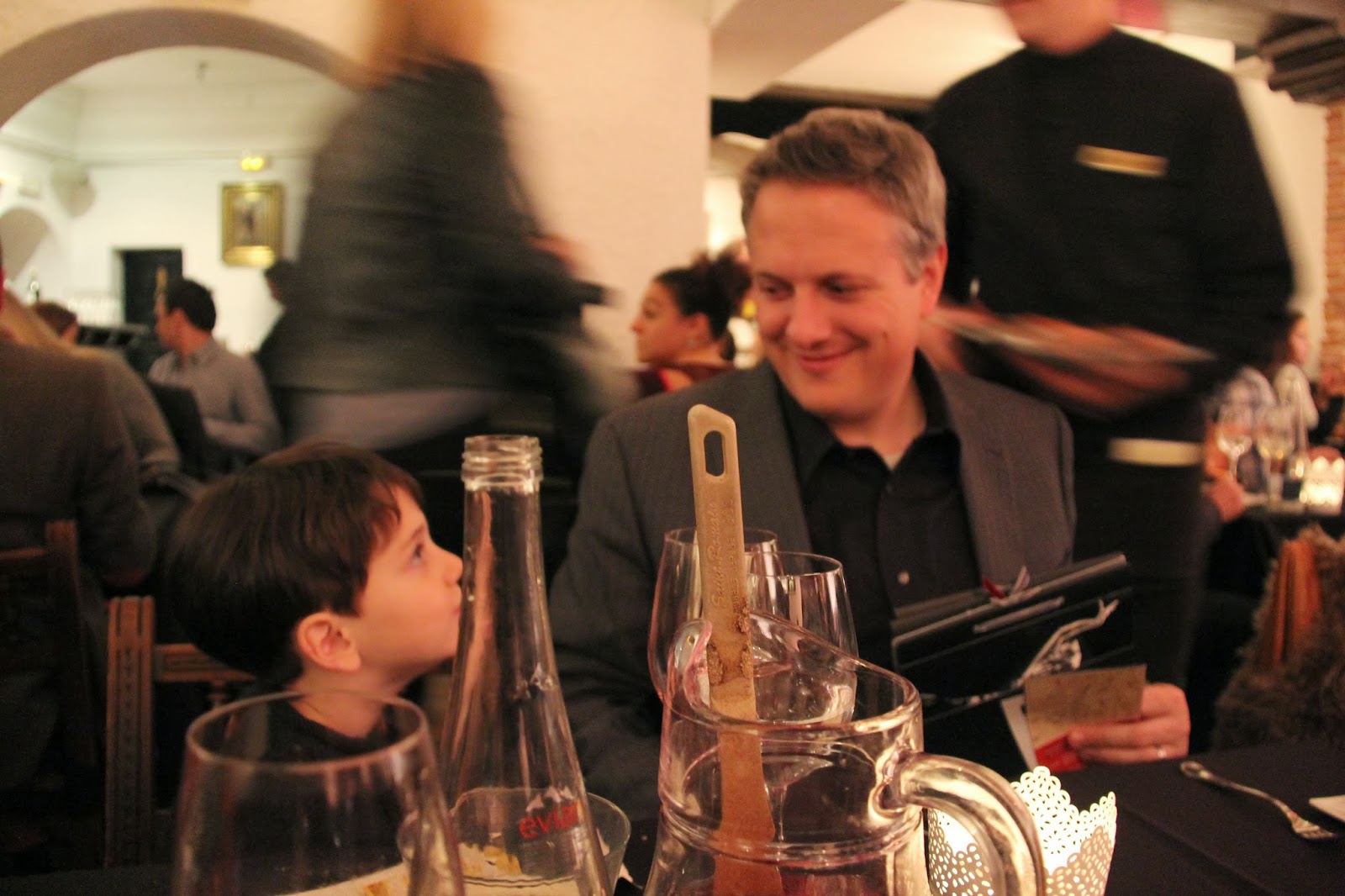
Madrid, you're also so romantic.  You were trying hard Saturday night, with dinner and a show.


Our weekend was wonderful, Madrid, but I cannot lie.  My heart's not in it.  Or differently, Madrid, I can't find your heart. I'm having trouble finding (the) Spain in Madrid.

My dalliance with your sister-city, Barcelona, just a few years back, was much more soulful.  Perhaps I'll go back.  To find Spain, that is.

I hope we can still be friends.

xoxo

Thursday, November 7, 2013

Date Night Discoveries


We have the best babysitter in Amsterdam!

Her name is Liz, and she came into our lives about two months ago.  The kids adore her.  They claim she can do the "best art ever" and that she "dances funny." 

Liz is from Amsterdam and has dedicated many (of her young) years working in an orphanage in Ghana; only to become frustrated with the inefficiencies and tragedies she witnessed.  So, she came home and  started her own NGO to support the orphanage.  She is currently doing an internship and just received her graduate diploma today.  Way to go Liz!

Because of Liz, we've had three exquisite, and long-awaited, date nights.

It's so much easier to enjoy this:


When you know everyone's happy back home:


Of course without children by our side, we are able to enjoy Amsterdam in new ways on date nights.  Our mind and our senses are alert to things we may not otherwise be equipped to notice, and to do things that are typically impractical.

Last Saturday, we went to the movies.  And I mean that in the plural.  We had planned to see one movie and then go to dinner.  Instead, we went to see Woody Allen's latest, Blue Jasmine, and relishing the chance to totally escape, we grabbed a burger at a gourmet burger bar near Rembrantplein and went to see a second movie, Gravity.  A double-feature evening!  After having kids and being interrupted a million times a day, I didn't realize I was capable of focusing my attention for that long.


The first thing that struck us during our evening out is that you can drink a beer or glass of wine in Amsterdam movie theaters. You and your buddy can even buy a four-pack so you don't have to leave your seats.

Perhaps this is changing in the States and becoming more common, but what on earth is the delay?  What's all the fuss?  It's a lovely, relaxing way to enjoy a film, and even at a 22:30 showing of a Clooney/Bullock blockbuster, alcohol did not result in complete mayhem.

I confess that I have not read any of the books I've acquired explaining Dutch culture.  They are all on my nightstand, and I will read them eventually. But for the first six months or so of our arrival I wanted to experience my own first impressions and get to know The Netherlands and my Dutch neighbors for myself.  I wanted to get acquainted with Dutch culture, first through the lens of my activities and my experience, and then read about it in a book.

One of the first things I noticed is the Dutch assumption that you are responsible for yourself.  "Be normal," they say, meaning don't act crazy/pretentious/out-of-control.  Handle yourself.

To keep things running smoothly, there is lot of structure and order incorporated into Dutch society (and they are known for this overarching system intended to benefit everyone on the social scale), but beyond this general framework it appears that the cultural norm is to fend for yourself and to hold yourself responsible.

This can lead to chaos and, believe me, I predict there will be many more posts about the motley style of  everyday life in Holland.  It's as if there's a little bit of mishmash stuffed inside an otherwise tidy sandwich. Most hilarious, and infuriating, is the inability or lack of interest displayed by Dutch persons to form a line.  It's truly mind-boggling.

Is it not easier, more relaxing, and more reassuring to know that you're in front of that guy, and behind that woman?  Is it not easier to stand single-file, rather than in a huddle around whatever it is your waiting for?  My Dutch hairdresser went to Florida for vacation in October, and she couldn't believe how everyone stood in a line for the bathroom at Disneyworld, and when approaching a ride or bathroom, said, "Excuse me, but are you in line?"

To me, forming a line is intuitive, if not human nature, for anyone seeking order in ambiguous circumstances.  But I've encountered countless examples to the contrary here in Amsterdam.  Just this week, I took the kids for required vaccinations during the required times of the walk-in government clinic.  There must have been over a hundred parents with children, and no one attempted to form a line.  Instead, each time the nurses opened the door to bring in a new patient, everyone looked around frenetically, until someone asserted themselves as next in line.  Stressful!!!

You should see everyone getting on and off a tram around here. Or vying for a checkout aisle at the grocery store.

So, not surprisingly, when I stepped up to the theater box office, there did not appear to be a line of any sort.  All of us crowded around the ticket booth, looking at one another, until someone stepped forward.  The punchline to all of this is that movie tickets are for assigned seats.  No more finagling once inside.  Just sit down and enjoy that beer!  And once inside, be normal! 

Of course, I realize I'm not the first to be enchanted with the Dutch custom of serving drinks at the movies.  One of the most famous (and funniest) scenes in Pulp Fiction touches on this too, not to mention the city's famous "coffee houses."  Remember?!!?   Quarter Pounder with Cheese Scene in Pulp Fiction

Stay tuned for more "Date Night Discoveries."


Sunday, November 3, 2013

"Lines Written a Few Miles Above Tintern Abbey"

Grand Tour of Wales:  Day 10-12

We spent our last few days in Wales in a converted barn in the Brecon Beacons of Mid Wales.

There was no internet access or decent cell coverage, and when we returned home to Amsterdam a few days ago, our home internet was also down. This effectively means that I've been offline for almost a week.  Holy disconnect!

It goes without saying that we all welcomed the chance to check out for bit and reflect on our trip and on Wales.

Here's what Abby had to say:

We spent our vacation in Wales.

We saw lots of castles and churches.  

But there weren't any princes or princesses living in the castles.  We were all alone.  It was like we really lived there as a family.  Daddy and Mama were the king and queen, and Reesey and me were the prince and princess.

We stayed at farmhouses and saw lots of cows and sheep.  Especially sheep.

We took an old train to the top of a mountain.  It was very cold at the top, and we were in the clouds.  There were sheep in the coldness.

We also went to a rugby match.  Wales was the red team.  The crowd made a big wave around the seats.  Afterwards, the server at the restaurant was very nice and gave us coloring books.

I had a wonderful time in Wales.  Nana Kay (great-grandmother) is from Wales.  We are going to send her a letter telling her all about our trip.


View from Rye Barn.


Much of the Brecon Beacons is national park, known for its rolling landscape and smooth moors.  It is considered a walker's paradise.

There are so many sheep that Reese declared it looked like the sky had rained those "puffy white things" (cotton balls).

The River Usk.


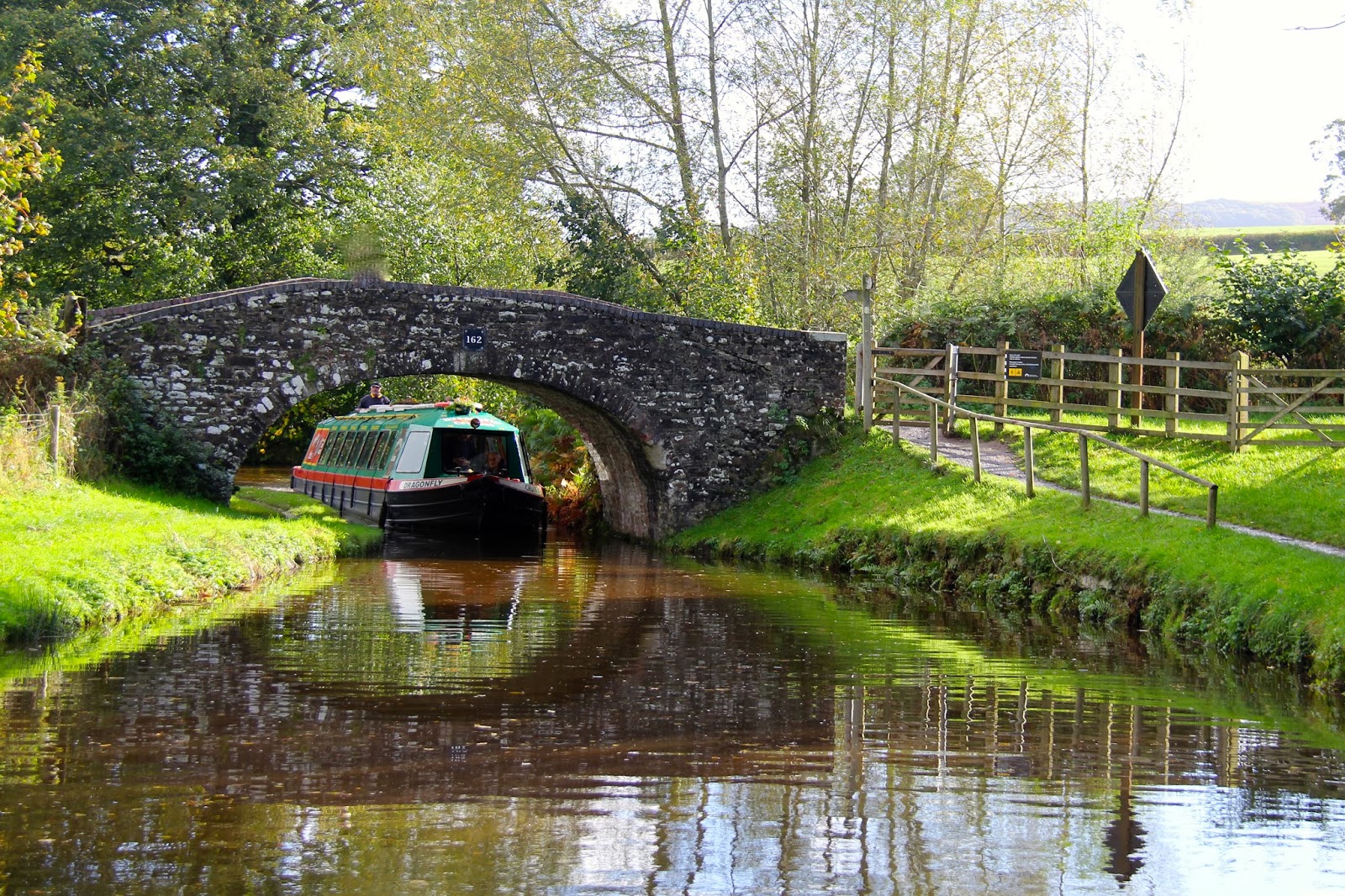
We even found a canal and a canal boat tour to do on one of our remaining days.  Apparently, we don't stray too far from Amsterdam nowadays.


Approaching the locks.
Locks filling with water to raise our boat.

This particular canal is pretty cool in that parts of it are an aqueduct traversing the River Usk.

The aqueduct.

Steering across the aqueduct.


It seemed fitting that our trip ended with a visit to the Cistercian abbey of Tintern.

Its fantastic ruins took my breath away.

The Abbey dates back to the 12th century and was destroyed in the 16th century during the Reformation (windows smashed in, roof crushed).

Two hundred years or so later, during the Romantic period, it became fashionable to visit wilder and more remote locations, and Tintern Abbey gained attention for its beauty and raw state.  Artists seeking the "romantic" and the qualities of light that Mid Wales is still known for today, started visiting Tintern.

William Wordsworth, inspired by Tintern and the Wye Valley that surrounds it, wrote "Lines Writtem a Few MIles Above Tintern Abbey" in 1798.  The opening lines go like this:

Five years have past; five summers, with the length
Of five long winters! and again I hear
These waters, rolling from their mountain-springs
With a sweet inland murmur.*—Once again
Do I behold these steep and lofty cliffs,
Which on a wild secluded scene impress
Thoughts of more deep seclusion; and connect
The landscape with the quiet of the sky.


The sight of the monastery's cathedral structure is truly awing.

Entering it, I was reminded again of the scale of everything I'd seen in Wales.  Giant castles, soaring cathedrals, plunging cliffs, endless estuaries, hills that roll and roll and roll.  The people of Wales are fiercely proud and mighty, able to defend their culture, history and language over the course of centuries of invasion and subjugation.  The Red Dragon truly is a fitting national symbol.

The history of Wales is grand, and as so many of our photos from the past twelve days demonstrate, it's easy to feel tiny when set against this backdrop.


Yet, for all its magnificence, I couldn't help but be struck by the approachability of Wales.

It is a small country without a a truly major highway.  It's one major city is a town, really; and it's towns more like villages.  The mountains are dramatic, but not imposing. The sheep, heads down, grazing below the enormous, white cumulus clouds that populated the sky during our entire stay, seemed to still the land in a gentle hush from above and on the ground.  It's quiet in Wales.

The Welsh people are kind and welcoming, eager to tell you about the local "real" ale (ale brewed in a casket without additives and always served at room temperature). They have a unique place in history, having protected their culture and language despite subjugation; one cannot take a broad brush and label them as Englishmen.  Rightly, they take offense at that characterization, and because of these poignant defining qualities, they ultimately seem very knowable.


On a more personal level, we are, of course, grateful to have visited the country where Abby and Reese's only surviving great-grandparent was born and raised.  We are mindful of the precious opportunity we have to share this experience with her.

We are also grateful to have spent twelve days outdoors.  All of our activities and sight-seeing excursions took us outside, in fresh air.  Strangely, this is one of the most memorable aspects our our trip.   The light and sky are glorious in Wales, and perhaps someday I'll find the words to really capture this essential quality of Cymru.

In closing, to quote a hero of Wales, here is Dylan Thomas's most famous poem, "Do not go gentle into that good night," in its entirety.

Do not go gentle into that good night,
Old age should burn and rave at close of day;
Rage, rage against the dying of the light.

Though wise men at their end know dark is right,
Because their words had forked no lightning they
Do not go gentle into that good night.

Good men, the last wave by, crying how bright
Their frail deeds might have danced in a green bay,
Rage, rage against the dying of the light.

Wild men who caught and sang the sun in flight,
And learn, too late, they grieved it on its way,
Do not go gentle into that good night.

Grave men, near death, who see with blinding sight
Blind eyes could blaze like meteors and be gay,
Rage, rage against the dying of the light.

And you, my father, there on that sad height,
Curse, bless, me now with your fierce tears, I pray.
Do not go gentle into that good night.
Rage, rage against the dying of the light.