The Goldfinch. Check.
The Girl with the Pearl Earring. Check.
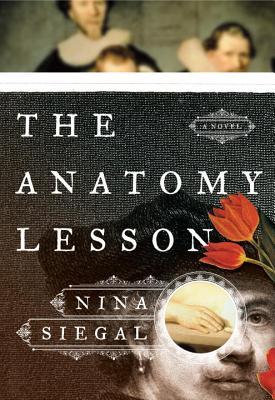
The Anatomy Lesson. Check.
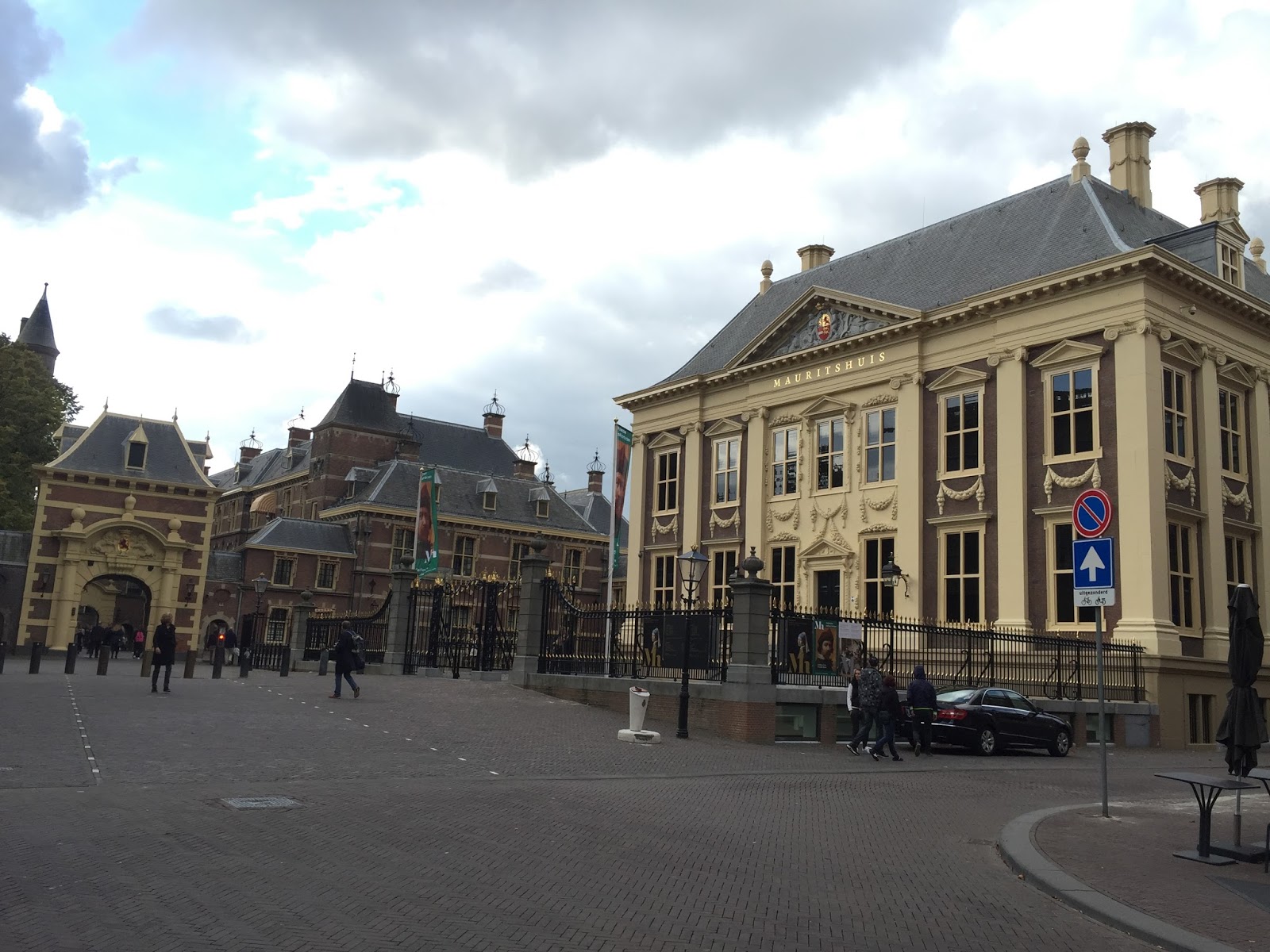
Got to see all three of these gems and many more Dutch Golden Age masterpieces at The Mauritshuis earlier this spring. It is easily now one of my favorite art museums in the world, housed in a seventeenth-century mansion in The Hague. I love, love, love small, intimate museums.
In case you've been living under a rock for the past couple of years, Donna Tart won the Pulitzer Prize last year for her novel centered around this very painting. I already had plans to see the painting, but after reading the book a visit to the real deal was a must. Regardless of one's opinion of the book (and they were polarized), it's hard not to be excited about the film adaptation.
Here it is, for real.
Tiny painting, huge inspiration.
It's just pretty darn cool to see this painting, "The Girl with the Pearl Earring," in such an intimate setting. I definitely did not have to stand sixteen rows deep in a throng of people à la the Mona Lisa at the Louvre.
I don't know what it is about those Dutch Masters, but this one, of course, also inspired a novel and a critically acclaimed movie:
Last but not least, Rembrandt's, "The Anatomy Lesson." I've waiting a long time to see this one. So much of my studies and my rooting around Amsterdam seem to uncover another tie-back to this painting, including lunch with my husband in the old weigh house at the top of which the "lesson" took place and Rembrandt watched and painted this:
It will come as no surprise, but here's a well-received modern novel inspired by the painting!
Showing posts with label Literature. Show all posts
Thursday, July 14, 2016
Friday, June 3, 2016
Dutch Bucket List (The Most Liberal City)
I confess. I have a lot of literary crushes: Michael Pollan, David McCullough, Robert Massey, Alice Munro, to name just a few.
Upon moving to Amsterdam, I added Russell Shorto, whose books on Amsterdam and New Amsterdam (aka, New York) have been praised by critics worldwide.
Admittedly, I've been so busy reading fiction and writing and doing mom stuff that I just got around to reading this darling by Shorto, which has been on the bucket list for three years:
I now have such a better understanding of Amsterdam's contributions to the modern world. And I'm stunned by some of Shoto's personal anecdotes, which eerily mimic my own experience here in Amsterdam. I've paid so much closer attention to my surroundings because of this book.
As we all hopefully know, New York was settled and founded by the Dutch. We are in the process of moving from Amsterdam to what was once called "New Amsterdam" before English settlers took it over from the Dutch and named it after a city back in England: York.
I mentioned in a previous post that I figured my bucket list would beget an even bigger bucket list. Shorto has written another widely acclaimed work about the Dutch islandcalled Manhattan, and this book, of course, is now on my reading bucket list. You can count on the fact that I'll be reading this one before I land in my new home.
Finally, as mentioned above, Robert K. Massie is one of my favorite authors. I read his book on Peter the Great way back in the early 90's, and DS gave me his book on Catherine the Great when it first came out in 2011.
Regrettably, I never got around to it. It's been on my reading bucket list (and on my nightstand) ever since. It may not be on my Dutch bucket list, but I did finally get around to starting it recently.
I'm half-way through, and wouldn't you know it, but the Hermitage Museum here in Amsterdam (sister museum to the world famous Hermitage in St. Petersburg, Russia) is launching a new exhibit all about you-know-who: Catherine the Great. It starts June 18. Guess what I've added to my bucket list?
Upon moving to Amsterdam, I added Russell Shorto, whose books on Amsterdam and New Amsterdam (aka, New York) have been praised by critics worldwide.
McCullough
McCullough
McCullough
McCullough
McCullough
McCullough
McCullough
Admittedly, I've been so busy reading fiction and writing and doing mom stuff that I just got around to reading this darling by Shorto, which has been on the bucket list for three years:
I now have such a better understanding of Amsterdam's contributions to the modern world. And I'm stunned by some of Shoto's personal anecdotes, which eerily mimic my own experience here in Amsterdam. I've paid so much closer attention to my surroundings because of this book.
As we all hopefully know, New York was settled and founded by the Dutch. We are in the process of moving from Amsterdam to what was once called "New Amsterdam" before English settlers took it over from the Dutch and named it after a city back in England: York.
I mentioned in a previous post that I figured my bucket list would beget an even bigger bucket list. Shorto has written another widely acclaimed work about the Dutch islandcalled Manhattan, and this book, of course, is now on my reading bucket list. You can count on the fact that I'll be reading this one before I land in my new home.
Finally, as mentioned above, Robert K. Massie is one of my favorite authors. I read his book on Peter the Great way back in the early 90's, and DS gave me his book on Catherine the Great when it first came out in 2011.
Regrettably, I never got around to it. It's been on my reading bucket list (and on my nightstand) ever since. It may not be on my Dutch bucket list, but I did finally get around to starting it recently.
I'm half-way through, and wouldn't you know it, but the Hermitage Museum here in Amsterdam (sister museum to the world famous Hermitage in St. Petersburg, Russia) is launching a new exhibit all about you-know-who: Catherine the Great. It starts June 18. Guess what I've added to my bucket list?
Saturday, February 6, 2016
SERIAL
Yikes, I'm such a late adopter!
Still half-way through Season 1, and I like it so much I'm not sure if I want to go slow and relish it OR binge-listen and get to Season 2.
Nowadays, this is the only thing I do on my bike or while running.
Still half-way through Season 1, and I like it so much I'm not sure if I want to go slow and relish it OR binge-listen and get to Season 2.
Nowadays, this is the only thing I do on my bike or while running.
Monday, September 21, 2015
Members of the Community
Two years later, we finally signed up for city library cards. I'm feeling like such a resident.
It was the perfect rainy day activity, affording us the opportunity to visit the very cool central library of Amsterdam. A & R checked out books with their very own library cards.
The library is home to this crazy mouse house, made famous by the children's book of the same name. There are over 100 miniature rooms in the mansion.
The view from the cafe at the top of the library:
It had been a while since we bopped around town using the tram. Kids waiting for the #5, which takes us from Museumplein to Central Station and the library.
It was the perfect rainy day activity, affording us the opportunity to visit the very cool central library of Amsterdam. A & R checked out books with their very own library cards.
The library is home to this crazy mouse house, made famous by the children's book of the same name. There are over 100 miniature rooms in the mansion.
The view from the cafe at the top of the library:
It had been a while since we bopped around town using the tram. Kids waiting for the #5, which takes us from Museumplein to Central Station and the library.
Tuesday, June 30, 2015
Lit Love: Chimamanda Ngozi Adichie
I love this woman. Chimamanda Ngozi Adichie has been a writing inspiration to me for a number of years, and I study her craft with the same excitement I have when I open a map and set off to explore a foreign place.
Yet Adichie also finds the most welcoming ways to engage her readers and audiences (she is a rather popular public lecturer) in the issues of our time. She recently gave the commencement speech at Wellesley, and in just a few minutes she brought insight and relatability to the topic of feminism through storytelling about her mother. Her point (and caution) is this: there's not one so-called feminist response to all situations. As Adichie says "gender is always about context and circumstance' and "life is messy," meaning standardized ideology doesn't fit all situations.
Check out this link for more excerpts from her recent lectures. The story about her mother is quoted below, and the full commencement speech can be found here.
Adichie's emphasis on the "danger of the single story" and "standardized ideology" resonate to say the least. As does her fiction work. My favorites are Half a Yellow Sun and That Thing Around Your Neck.
And who can't get drawn in by her smile? My guess is that she's as warm and funny and accessible and strong and insightful in person as she appears in her work and in her smile.
Yet Adichie also finds the most welcoming ways to engage her readers and audiences (she is a rather popular public lecturer) in the issues of our time. She recently gave the commencement speech at Wellesley, and in just a few minutes she brought insight and relatability to the topic of feminism through storytelling about her mother. Her point (and caution) is this: there's not one so-called feminist response to all situations. As Adichie says "gender is always about context and circumstance' and "life is messy," meaning standardized ideology doesn't fit all situations.
Check out this link for more excerpts from her recent lectures. The story about her mother is quoted below, and the full commencement speech can be found here.
Adichie's emphasis on the "danger of the single story" and "standardized ideology" resonate to say the least. As does her fiction work. My favorites are Half a Yellow Sun and That Thing Around Your Neck.
And who can't get drawn in by her smile? My guess is that she's as warm and funny and accessible and strong and insightful in person as she appears in her work and in her smile.
I bring greetings to you from my mother. She’s a big admirer of Wellesley, and she wishes she could be here. She called me yesterday to ask how the speech-writing was going and to tell me to remember to use a lot of lotion on my legs today so they would not look ashy.
My mother is 73 and she retired as the first female registrar of the University of Nigeria—which was quite a big deal at the time.
My mother likes to tell a story of the first university meeting she chaired. It was in a large conference room, and at the head of the table was a sign that said CHAIRMAN. My mother was about to get seated there when a clerk came over and made to remove the sign. All the past meetings had of course been chaired by men, and somebody had forgotten to replace the CHAIRMAN with a new sign that said CHAIRPERSON. The clerk apologized and told her he would find the new sign, since she was not a chairman.
My mother said no. Actually, she said, she WAS a chairman. She wanted the sign left exactly where it was. The meeting was about to begin. She didn’t want anybody to think that what she was doing in that meeting at that time on that day was in any way different from what a CHAIRMAN would have done.
I always liked this story, and admired what I thought of as my mother’s fiercely feminist choice. I once told the story to a friend, a card carrying feminist, and I expected her to say bravo to my mother, but she was troubled by it.
“Why would your mother want to be called a chairman, as though she needed the MAN part to validate her?” my friend asked.
In some ways, I saw my friend’s point.
Because if there were a Standard Handbook published annually by the Secret Society of Certified Feminists, then that handbook would certainly say that a woman should not be called, nor want to be called, a CHAIRMAN.
But gender is always about context and circumstance.
If there is a lesson in this anecdote, apart from just telling you a story about my mother to make her happy that I spoke about her at Wellesley, then it is this: Your standardized ideologies will not always fit your life. Because life is messy.
Wednesday, May 27, 2015
Jardin du Luxembourg
I've always dreamed of channeling my inner Madeline at Luxembourg Gardens, sailing the little wooden sailboats with my very own children.
Our literary channeling wouldn't be complete without brunch at Les Deux Magots, the favorite Parisian haunt of the literary and artistic elite of the early 20th century (Hemingway, Satre, Picasso, Camus, Joyce . . .).
Got my chance this weekend while on a long weekend in Pairs with my mom. Her very first time to Paris.
They left the house
at half past nine
in two straight lines
in rain
or shine --
the smallest one was Madeline.
Our literary channeling wouldn't be complete without brunch at Les Deux Magots, the favorite Parisian haunt of the literary and artistic elite of the early 20th century (Hemingway, Satre, Picasso, Camus, Joyce . . .).
Sunday, April 13, 2014
Trip of a LIfetime
We're getting ready to take off on the trip of a lifetime to South Africa. The stars aligned, and we were able to dovetail a work trip for Doug with the kids' spring break.
We're so excited about this opportunity on many different levels, the most obvious being the incredible cultural and historical lesson we will receive. Of course, we are also restless to experience the natural beauty of South Africa with a week on the coast and four days in the bush on safari.
On a personal level, our little girl turns six during this trip, and we can only hope that this voyage is fun for her and introduces her to a lifetime appreciation of travel, diversity and cultural exchange.
I've been researching books and films about South Africa, most of which we'll never get to before we leave on Friday, but we've got a 12-hour flight and downtime after the kids go to bed while we're on vacation.
Of the many books to choose from, I've selected these three for my vacation reading list:
Disgrace, by J.M. Coetzee. Coetze is probably South Africa's most well-known and internationally acclaimed author. He's won the Nobel Prize in literature as well as numerous other literary awards.
The novel is about a white South African professor of English who loses everything in post-apartheid South Africa, an era of violence perpetrated by both whites and blacks in the shifting political landscape.
This one is first on my list.
Next is Mother to Mother, by Sindiwe Magona, a fictionalized account of the murder of Fulbright Scholar, Amy Biehl. Biehl was killed while helping organize the nation's first democratic elections in 1993.
Goodreads summarizes it like this:
"The murderer's mother, Mandisi, writes about her life, the life of her child, and the colonized society that not only allowed, but perpetuated violence against women and impoverished black South Africans under the reign of apartheid. The result is not an apology for the murder, but a beautifully written exploration of the society that bred such violence."
July's People, by Nadine Gordimer, is last on my vacation reading list. I'm really hoping I don't run out of time for this one; it was hard to come up with the order for these three books.
Gordimer is also a South African writer who also won the Nobel Prize in literature. Written in 1981, July's People imagines how apartheid will end, before it actually ended.
In Gordimer's novel, black South Africans violently overturn apartheid, and the main character, a liberal white South African family take refuge with the family of their black servant.
Here's info on other intriguing South African writers: http://theculturetrip.com/africa/south-africa/articles/top-ten-south-african-writers/
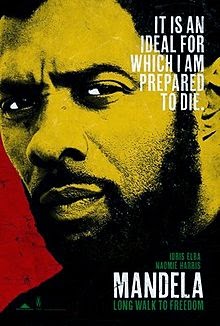
From what I can tell, most of the films about South Africa have been criticized for being directed by white men and starring (and directed by) people who do not come from South Africa. And to date, films about Nelson Mandela, specifically, have been criticized for portraying him as a saint--flawless and one dimensional. This is true even of the most recent film about Mandela, Mandela: Long Walk to Freedom, just released this year.
Criticisms aside, all of it is an education for us, so here's the stretch goal. We've seem a few of them before, but I suspect they will be worth the re-watch.
We're so excited about this opportunity on many different levels, the most obvious being the incredible cultural and historical lesson we will receive. Of course, we are also restless to experience the natural beauty of South Africa with a week on the coast and four days in the bush on safari.
On a personal level, our little girl turns six during this trip, and we can only hope that this voyage is fun for her and introduces her to a lifetime appreciation of travel, diversity and cultural exchange.
I've been researching books and films about South Africa, most of which we'll never get to before we leave on Friday, but we've got a 12-hour flight and downtime after the kids go to bed while we're on vacation.
Of the many books to choose from, I've selected these three for my vacation reading list:
Disgrace, by J.M. Coetzee. Coetze is probably South Africa's most well-known and internationally acclaimed author. He's won the Nobel Prize in literature as well as numerous other literary awards.
The novel is about a white South African professor of English who loses everything in post-apartheid South Africa, an era of violence perpetrated by both whites and blacks in the shifting political landscape.
This one is first on my list.
Next is Mother to Mother, by Sindiwe Magona, a fictionalized account of the murder of Fulbright Scholar, Amy Biehl. Biehl was killed while helping organize the nation's first democratic elections in 1993.
Goodreads summarizes it like this:
"The murderer's mother, Mandisi, writes about her life, the life of her child, and the colonized society that not only allowed, but perpetuated violence against women and impoverished black South Africans under the reign of apartheid. The result is not an apology for the murder, but a beautifully written exploration of the society that bred such violence."
July's People, by Nadine Gordimer, is last on my vacation reading list. I'm really hoping I don't run out of time for this one; it was hard to come up with the order for these three books.
Gordimer is also a South African writer who also won the Nobel Prize in literature. Written in 1981, July's People imagines how apartheid will end, before it actually ended.
In Gordimer's novel, black South Africans violently overturn apartheid, and the main character, a liberal white South African family take refuge with the family of their black servant.
Here's info on other intriguing South African writers: http://theculturetrip.com/africa/south-africa/articles/top-ten-south-african-writers/
From what I can tell, most of the films about South Africa have been criticized for being directed by white men and starring (and directed by) people who do not come from South Africa. And to date, films about Nelson Mandela, specifically, have been criticized for portraying him as a saint--flawless and one dimensional. This is true even of the most recent film about Mandela, Mandela: Long Walk to Freedom, just released this year.
Criticisms aside, all of it is an education for us, so here's the stretch goal. We've seem a few of them before, but I suspect they will be worth the re-watch.
Subscribe to:
Posts (Atom)